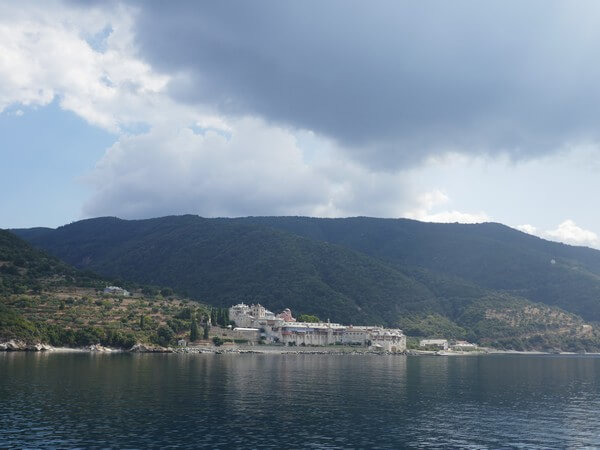
Halkidiki, the Riviera of the Northern Greece
Golden Sand, Turquoise Sea, and Mystery: Three Peninsulas, Three Unique Worlds
In Halkidiki, You’ll Find a Bit of Everything – golden beaches buzzing with international tourists (in season), trendy bars and restaurants, dramatic cliffs that drop into secluded stretches of sand, sailing, diving, watersports, and even a mysterious island where no woman has set foot in centuries.
The region is so popular among Greeks that during most of August, cities like Thessaloniki nearly shut down. Offices, shops, and cafés close, and the streets become quiet and empty. The city turns into a near “ghost town” as families head to Halkidiki, where many of them own vacation homes and return religiously each summer weekend and throughout August, enjoying the sea, nature, and serenity that Northern Greece’s Riviera is known for.
When people talk about visiting or vacationing in Halkidiki, they don’t mean a city by that name, but rather the three peninsulas (or one large peninsula split into three narrow land tongues) that stretch out like fingers into the Aegean Sea, about a two hours drive northeast of Thessaloniki.
Each peninsula has its own unique landscape, character, and charm and each one is a world of its own.
The Three Peninsulas of Halkidiki, in order from the closest to Thessaloniki.
First Peninsula: Kassandra
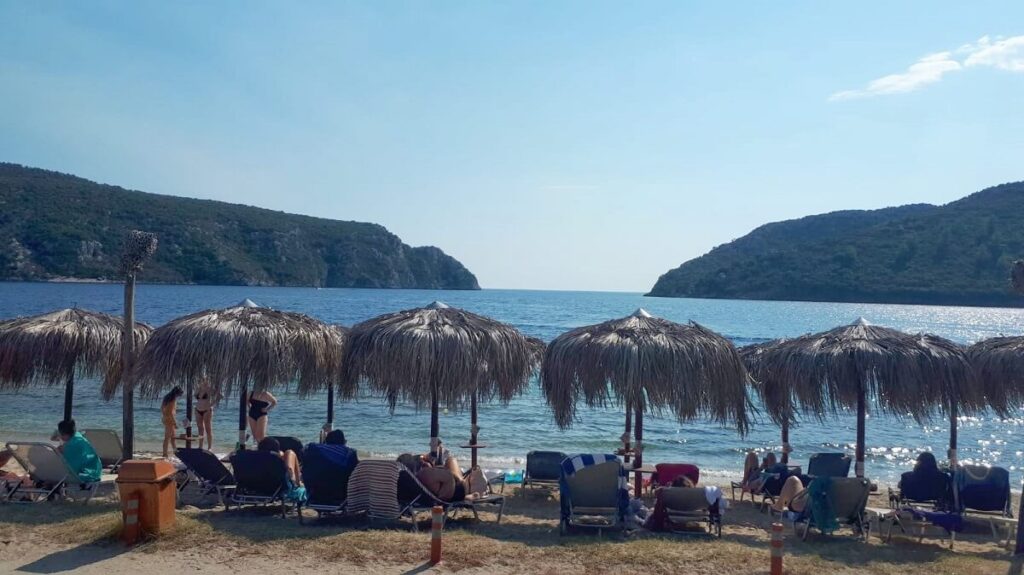
Kassandra is without a doubt the most famous, touristic, pampered, and well developed part of the islands. It’s the first “finger” of Halkidiki, and the closest to Thessaloniki, so it’s no surprise that this is where the summer crowds flock.
Kassandra has it all: golden sand beaches, trendy beach bars, crystal clear turquoise waters, luxury hotels and all kinds of accommodations you could think of.
The famous Golden Beach is a highlight, and summer life here is full of sunny days, vibrant nightlife, and easygoing fun. There’s a wide range of accommodations, from boutique resorts to family friendly hotels. But if you plan to come in peak season (July – August), booking in advance is a must.
Every year, Kassandra also hosts two well known festivals: the Sani Festival and the Sivris Festival – bringing music, art, and culture to the coastline, and crowds of tourists from all over Greece and beyond.
Kassandra is connected to the mainland by a bridge that crosses a canal at Nea Potidea and rumor says that the sunsets near the bridge are especially magical.
The tourist season usually winds down by mid September. Slowly, the crowds disappear, the beach bars close, and the entire region slips into a peaceful rest, recharging before the winter months.
Looking to extend your journey? Combine your vacation with a visit to Veria, Vergina, or Aigai. Enjoy rich history and natural beauty, and making it a worthwhile trip in any season.
Second Peninsula: Sithonia
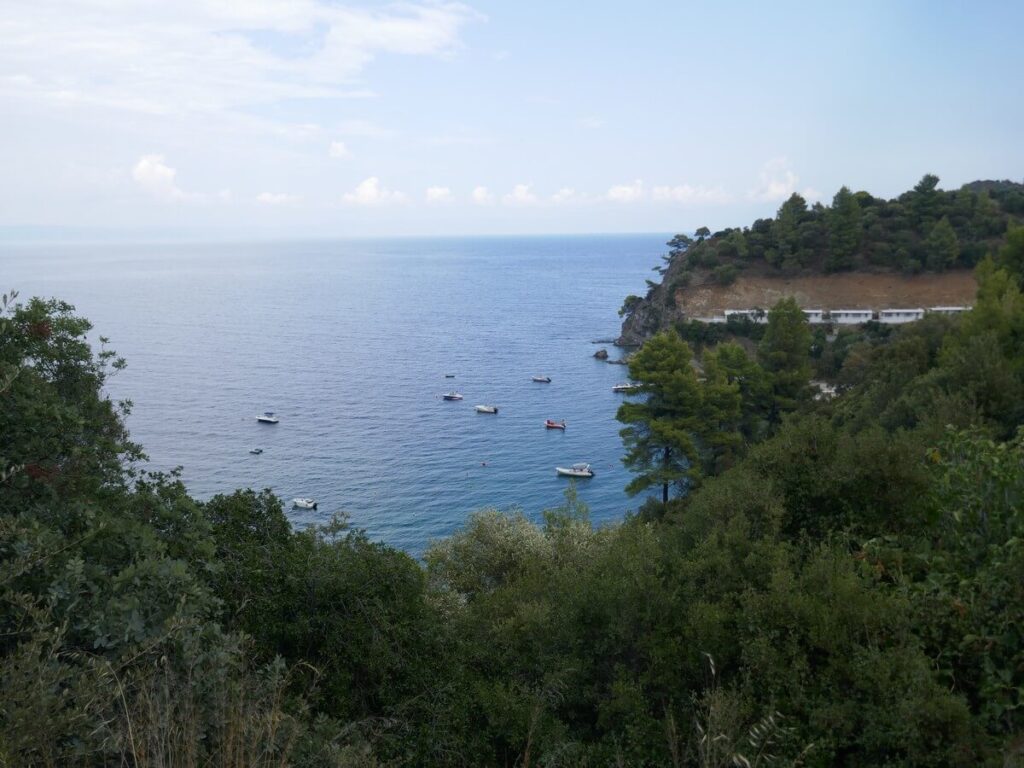
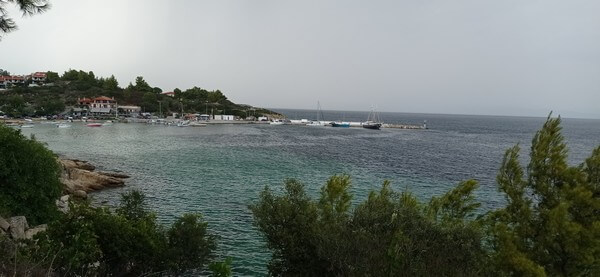
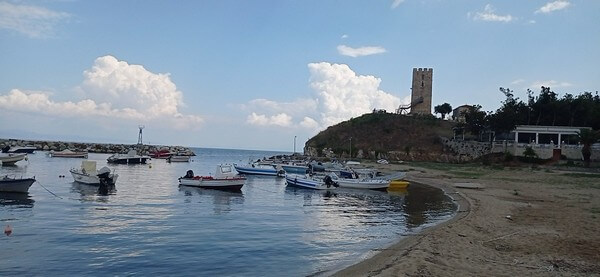
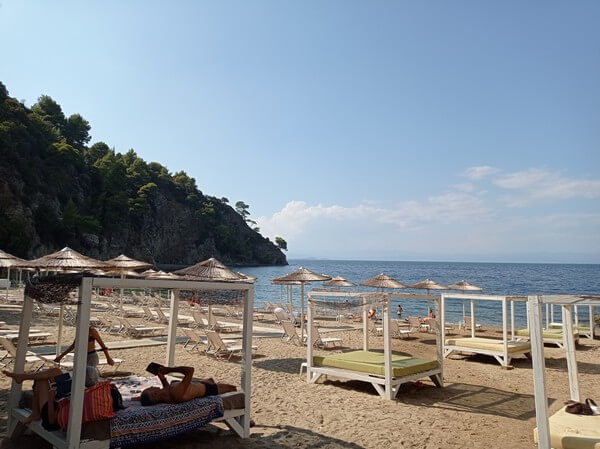
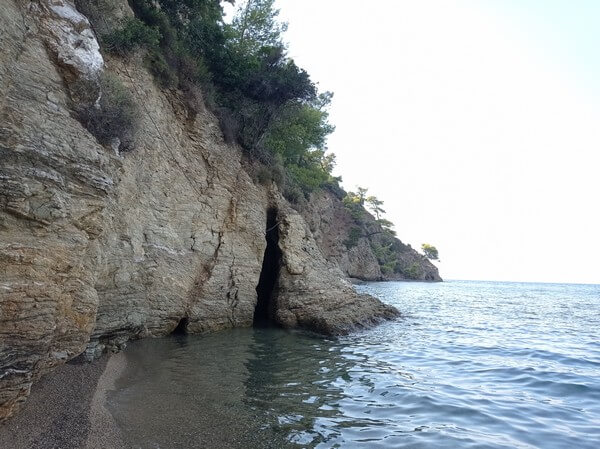
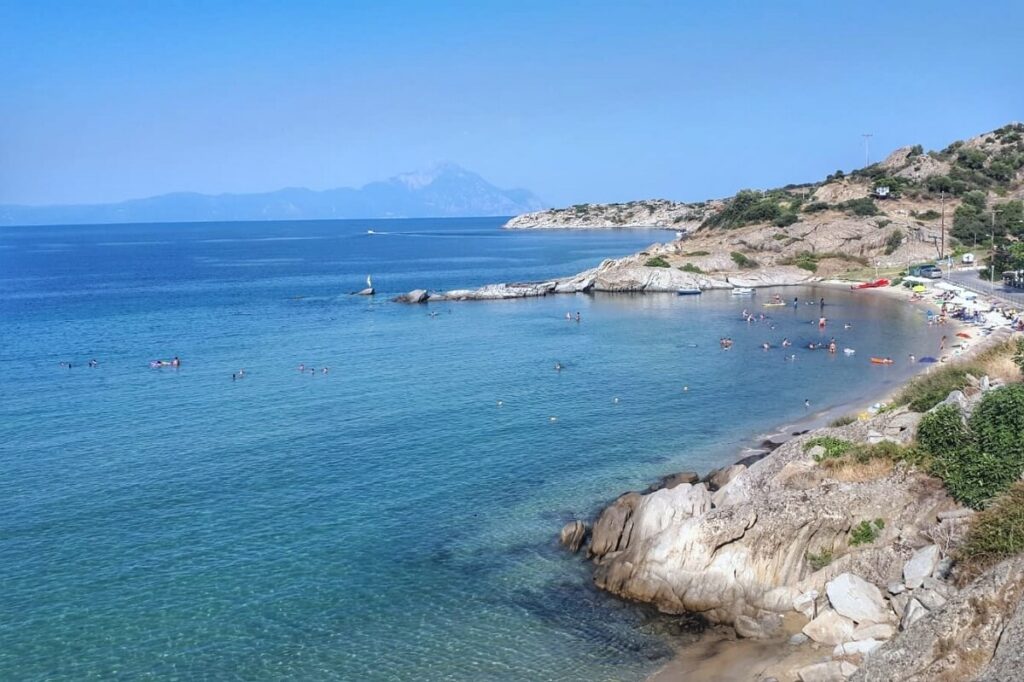
In Sithonia, you’ll find some of the most stunning and wild beaches in all of Greece. Turquoise Caribbean like waters, untouched nature, and a peaceful, less touristy atmosphere.
Flanked by the Kassandra and Athos peninsulas, Sithonia’s waters are exceptionally clear, often as transparent as a mountain lake.
Don’t miss a beach hopping tour, exploring charming villages, hidden coves, and try the scenic boat rides along the coastline.
Third Peninsula: Mount Athos
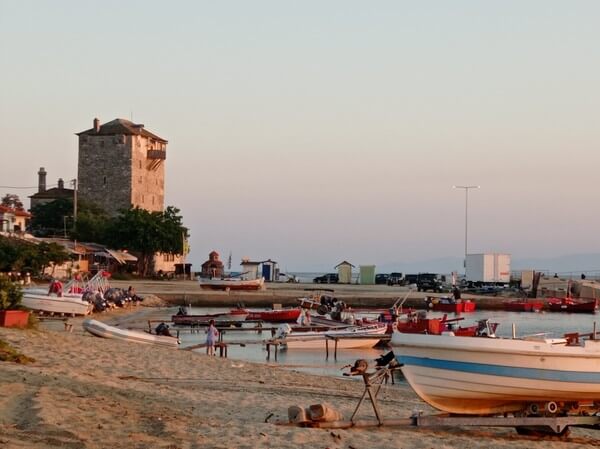
The Athos Peninsula or Mount Athos, also known as the “Holy Mountain”, is without a doubt the most unique and mysterious part of Halkidiki. It is also one of the most unique and sacred places in Greece and in all of Eastern Orthodoxy.
Located on the eastern of Halkidiki’s three peninsulas, this area is home to a centuries-old monastic community that enjoys autonomous status within Greece and the European Union.
As tourists, you likely won’t be able to enter the monastic republic itself, but you can sail along its coastline, photograph the dramatic views, and hear the fascinating stories of what lies hidden within.
In my opinion, this boat trip is the most unforgettable and unique experience you can have in Halkidiki.
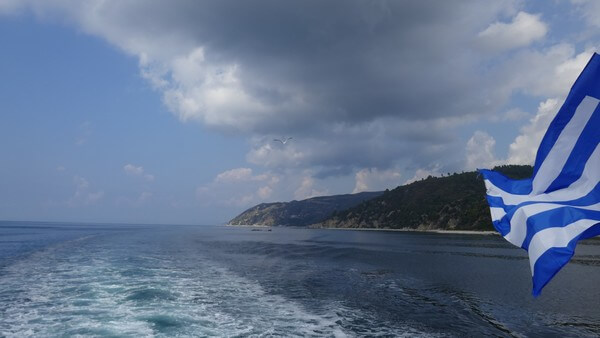
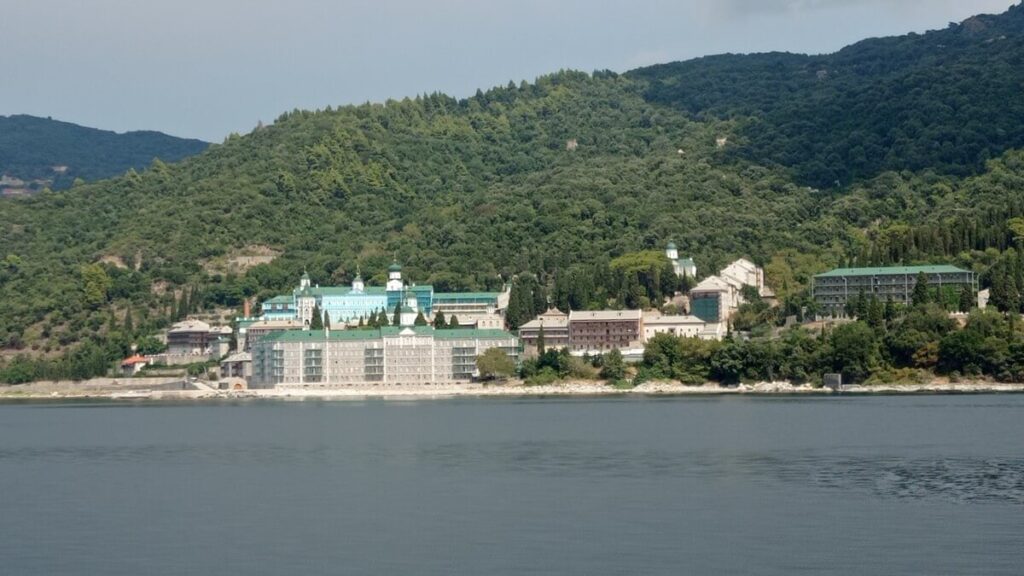
Mount Athos is a self-governed region that nowadays include 15 monasteries and a few smaller monastic settlements. Around 1,500 Eastern Orthodox monks live here, not only from Greece but from across the Orthodox Christian world, including Serbia, Russia, Romania, Bulgaria, Georgia, and Ukraine. The monks live an ascetic life, devoted to prayer, isolation, and tradition, in a setting that has remained largely unchanged since the Byzantine era.
Entry to Mount Athos area is strictly regulated. Only men are permitted to enter, and even they must obtain a special permit (called a diamonitirion).
Women, girls, and even female animals are completely forbidden. Most visitors, whether Greek or foreign, can only observe this mysterious world from afar, often by boat tours that cruise the coastline and offer glimpses of the ancient monasteries.
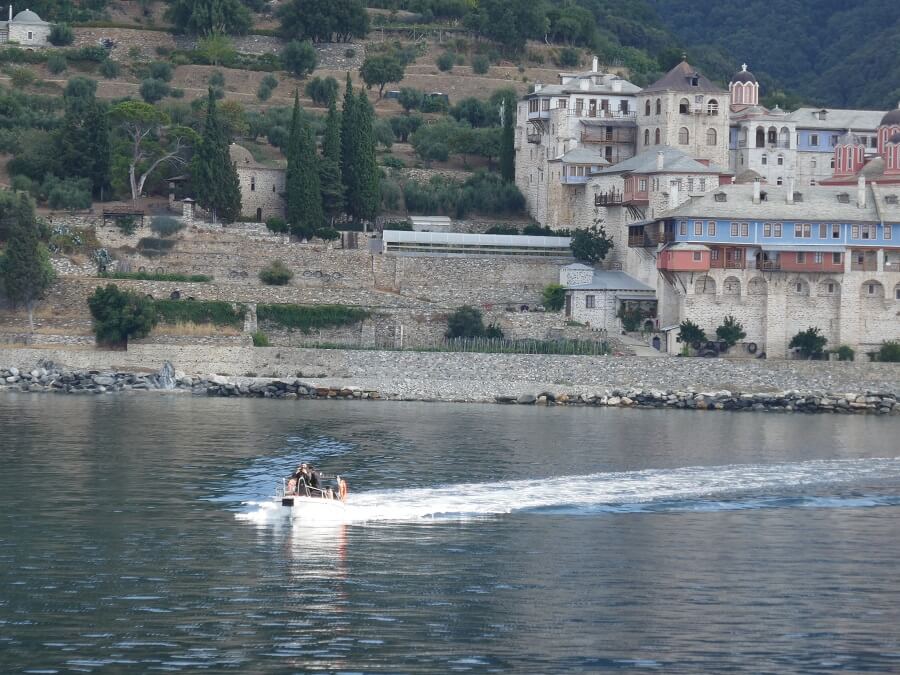
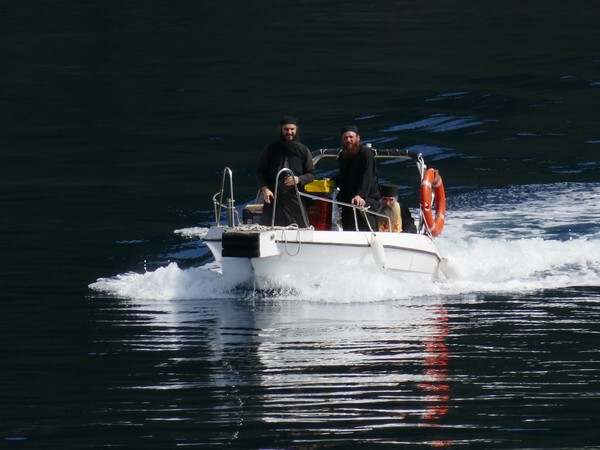
Boat tours to Mount Athos depart from various points along all three Halkidiki peninsulas, but the closest and most convenient departure spot is the town of Ouranoupoli, located right at the border of the autonomous Athos territory. Leaving from here means you won’t waste time sailing between the peninsulas.
If you’re lucky, your boat might be joined by monks coming from the island. They often bless the passengers, share words of wisdom, and sell sacred items and relics, turning the journey itself into a unique and spiritual experience.