
What Is a Pearl? Is It a Precious Gem, a Living Organism – or Both?
Everything You Wanted to know about Pearls and more: How Are Pearls made today? Types, Uses, History, and Legends...
The shores of the Persian Gulf have been known as one of the world’s main sources of pearls for thousands of years.
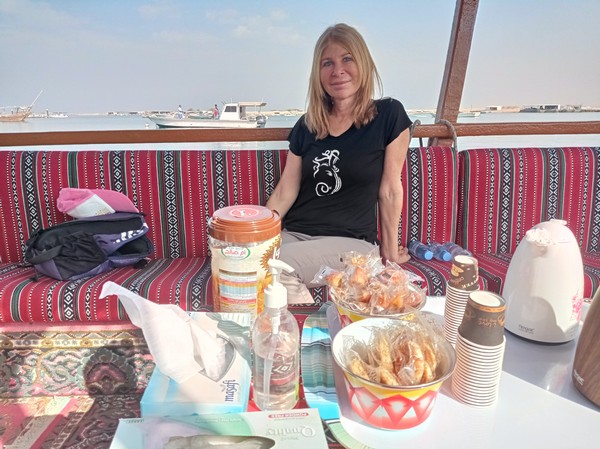
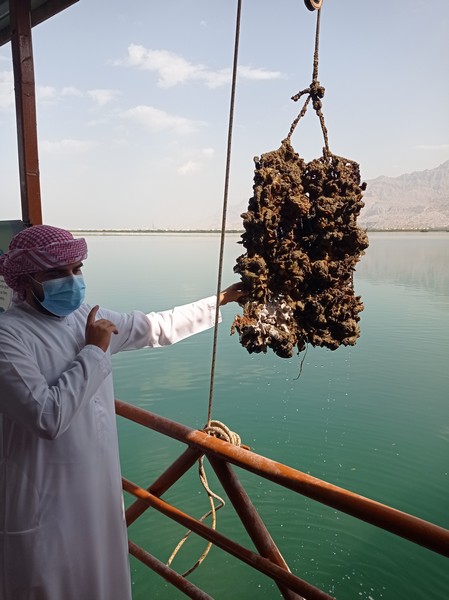
I was first introduced to the fascinating world of pearls during a tour of a pearl farm in the emirate of Ras Al Khaimah, in the United Arab Emirates. The journey continued in Dubai and other locations dedicated to this rare field that bridges the world of living nature with the world of gemstones.

The Al Suwaidi family from the emirate of Ras Al Khaimah has been engaged in pearl diving for many generations.
At the beginning of the century, their pearl farm underwent a transformation and opened its doors to tourists and visitors, offering a glimpse into the secrets of this traditional trade.
Suwaidi Pearls farm is essentially a large floating platform and boat dock, located north of Ras Al Khaimah city and accessible via a short boat ride.

Historical Background of the World of Pearls
The earliest known evidence of human fascination with pearls dates back around 8,000 years.
In ancient times, people didn’t understand how pearls were formed, and many myths arose to explain their mysterious origin. Some believed that moonlight striking an open oyster floating on the sea at night created a pearl, while others thought it was formed by a drop of rain falling into the shell.
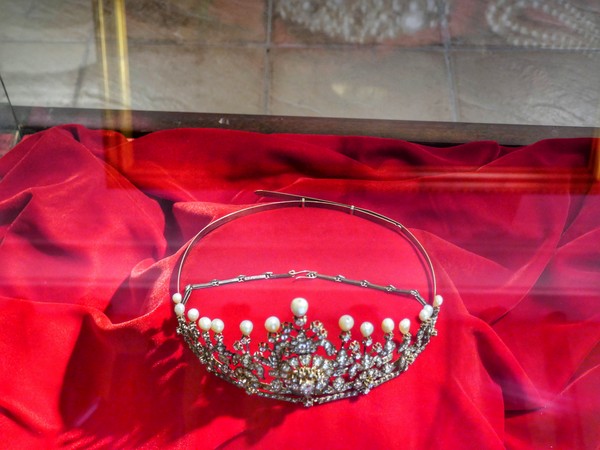
Since antiquity, the majority of the world’s pearls, about 80% came from the Persian Gulf. From there, they were exported to India, the Far East, Sri Lanka, and later to Europe. For centuries, and even millennia, pearls were among the most precious resources in the world. The number of pearls in one’s crown or vault served as a symbol of wealth and status among royalty and nobility.
The fact that Dubai and Abu Dhabi served as key hubs in the pearl trade is what originally turned them into regional powers, long before the discovery and exploitation of oil fields in the 20th century.
Traditional Pearl Diving
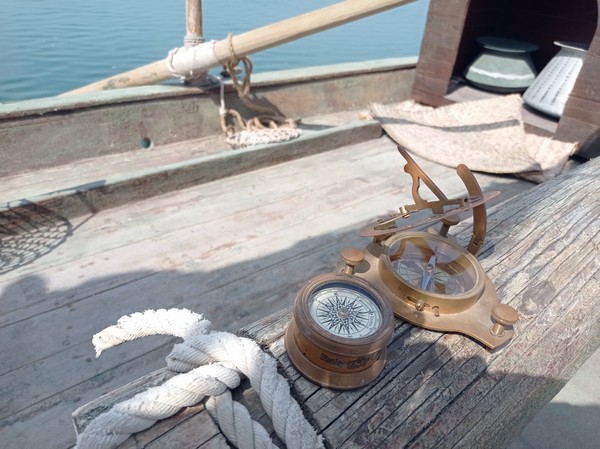
Pearl harvesting was a demanding and dangerous craft carried out from special boats that sailed the sea. Each vessel hosted about 20 crew members, but only 2 to 3 of them were expert divers, skilled enough to plunge deep beneath the waves.
These boats would embark on their pearl diving season for roughly four months from May through August.
The rest of the crew played vital roles: the sailors navigating the waters, cooks preparing meals to keep the men fueled, and caretakers managing the delicate equipment.
Every diver was accompanied by a personal helper, whose critical job was to haul the diver safely back onto the boat after each challenging dive.
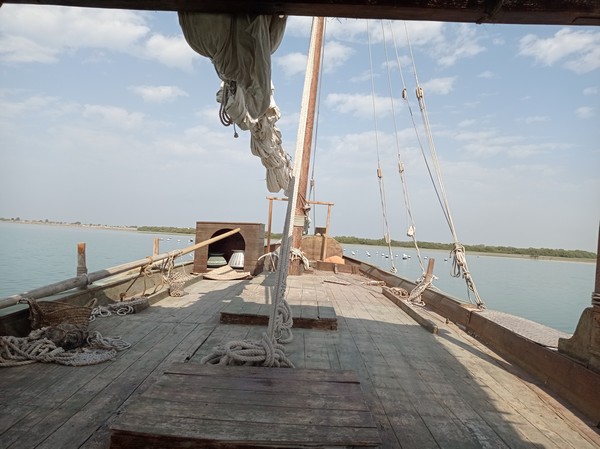
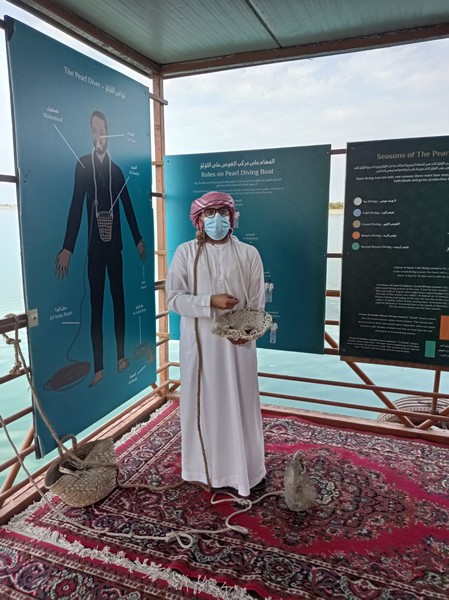
The traditional diving gear was simple yet essential: a heavy stone, a woven basket, a rope, and a nose clip made from tortoise shell. The diver would sink deep into the water using the weight of the stone, collecting as many oysters as possible in the basket.
When air ran low, he would signal his assistant to pull him rapidly back to the surface. Each dive lasted between 2 to 5 minutes, at depths of 30 to 50 meters.
Traditional Pearl Diving Risks
On average, only one high-quality pearl could be harvested from every 100 oysters gathered from the deep sea.
And that’s not even mentioning the pirates, who eagerly awaited the pearl boats returning after a whole season, laden with their precious catch …
The divers’ work was extremely dangerous and took a heavy toll on their health over time. For at least four months each year, divers would descend daily for 50 to 200 deep dives, gradually damaging their bodies. This condition, known as barotrauma, results from the physical harm caused by pressure differences inside body tissues.
In addition to the physical strain, the waters held other dangers: sharks, stinging coral, venomous fish — just a few of the many threats. A nose clip slipping at depth could prove fatal. Prolonged exposure to salty water also caused cumulative damage to their eyesight, sometimes leading to blindness.
How to Properly Care for Pearl Jewelry
Pearls are very delicate to the touch! Sweat, body lotion, any acidic liquid, and even perfume can cause irreversible damage to them.
To maintain the quality of your jewelry, after each use or contact, clean every pearl with clean water (without soap or any other substances) and gently wipe it with a soft cotton cloth.
The Beginning of the Cultured Pearl Era
Around 1940, the Japanese discovered methods to cultivate pearls artificially. At the same time, with the rise of sea pollution, habitat destruction, and over-harvesting of oysters, nearly all pearls available on the market today come from cultured pearl farming.
Suwaidi Pearls farm also transitioned to cultured pearl production in 2005.
So how is a pearl formed, and what is the difference between a natural pearl and a cultured (artificial) pearl?
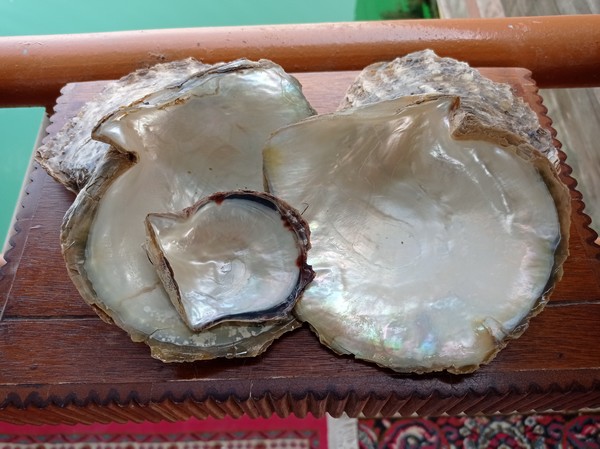
Naturally, the oyster remains tightly closed almost all the time. A pearl is the oyster’s response to a foreign object that has entered its shell.
Naturally, the foreign object can be a parasite, physical injury, grains of sand, or crabs trying to open the oyster to feed. The oyster then begins to build protective layers around the irritant, and over several years, a pearl is formed. The layers coating the foreign body are made of the same material and color as the inner lining of the oyster (the mother-of-pearl).
In cultured pearl farms, a similar process is carried out, but it is intentional. When oysters reach a certain size, a small piece of mother-of-pearl is implanted inside them. The oyster recognizes this as a foreign object and starts coating it with layers of pearl. After about two to three years, a beautiful pearl is produced.
Unlike natural pearls, with cultured pearls you can predict in advance the type and color of the pearl that will form, and the pearls tend to be rounder and more uniform. Additionally, almost every implanted oyster will produce a pearl.
Better for the environment
An important factor is that cultured pearl farming has minimal impact on the marine environment, unlike natural pearl harvesting, which causes significant damage to marine habitats.
What Determines the Value (Price) of a Pearl?
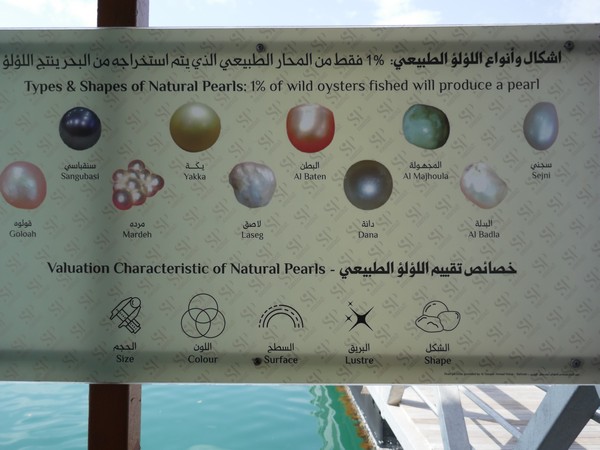
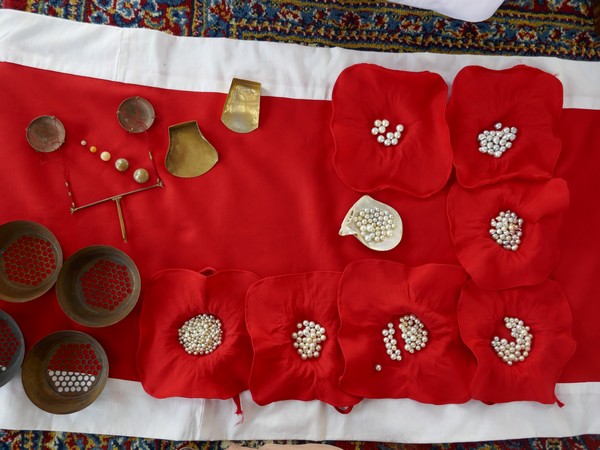
Different types of oysters produce pearls in various colors. The value assessment is based on five parameters:
Size or weight
Color: Pearls come in five main shades: white, greenish, pink, cream, black, and bluish. White is the most common and sought-after, while bluish is the rarest. Of course, there are also intermediate hues of each type.
Shape: A perfectly round pearl has high value, but interestingly, natural pearls with “imperfect” shapes are often valued even more.
Luster or shine level
Surface uniformity
The Significance of Pearls in Ancient Cultures
Throughout history, pearls have held deep symbolic and cultural significance across civilizations.
The ancient Egyptians buried (and embalmed) their dead with their most treasured possessions including pearls, believing these precious gems would accompany them into the afterlife.
In China, pearls adorned the crowns of emperors and the sacred statues of Buddha, symbolizing purity and spiritual power.
In ancient Greece, pearls were regarded as a symbol of love and marriage, cherished as tokens of devotion.
In ancient Israel, it was believed that pearls came from the Garden of Eden, placed there by God as divine ornaments.
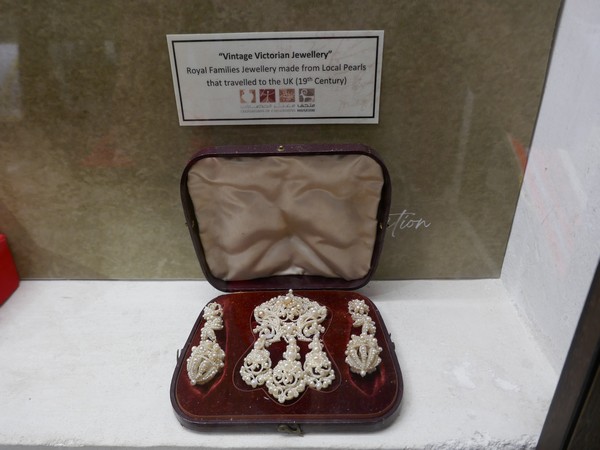
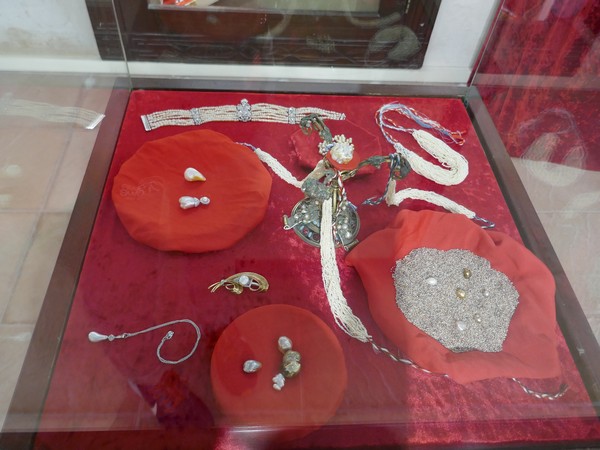
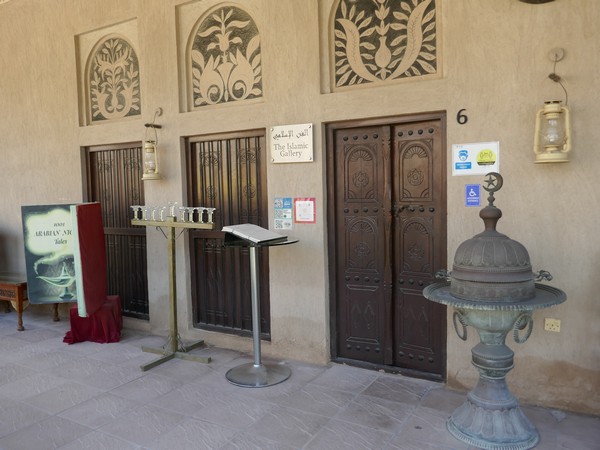
At the Crossroads of Civilizations Museum in Dubai, an entire wing is dedicated to the rich pearl culture – a testament to their timeless allure and significance.
Facinating Facts About Pearls – Out of the Box
- Pearls are the only gemstones created by living organisms.
- Pearls are the only gemstones that grow over time.
- The color of the oyster determines the color (type and value) of the pearl.
- Pearls dissolve in acidic liquids such as vinegar, wine, and orange juice.
- Natural pearls are often more valued precisely because of their imperfections and irregularities.
- Growing a pearl to a commercial size takes between two to five years.

The Story of Cleopatra and the Pearl
Cleopatra, the legendary queen of ancient Egypt, was known not only for her beauty and political savvy but also for her flair for the dramatic. One of the most famous stories about her involves a bold wager with Marcus Antonius, one of Rome’s greatest military commanders. Cleopatra claimed she could host the most expensive meal in history! A challenge Antonius eagerly accepted.
To prove her point, Cleopatra presented a simple glass filled with vinegar at the banquet. As the guests watched in anticipation, she took the most valuable pearl she owned, a gem said to be unmatched in size and purity – and dropped it into the glass.
The pearl slowly dissolved in the acidic vinegar, and with a confident smile, Cleopatra drank the entire contents of the glass, turning what seemed to be a humble drink into a display of unimaginable wealth.
Stunned and defeated, Marcus Antonius conceded that she had indeed won the bet.
Their lives afterward were marked by passion and turmoil. Cleopatra and Antonius moved between Egypt and Rome, caught in the swirling tides of politics and war. Their story ended tragically in 30 BCE during the Roman civil war, when both took their own lives in Egypt, forever sealing their names in history as tragic lovers and powerful figures.
